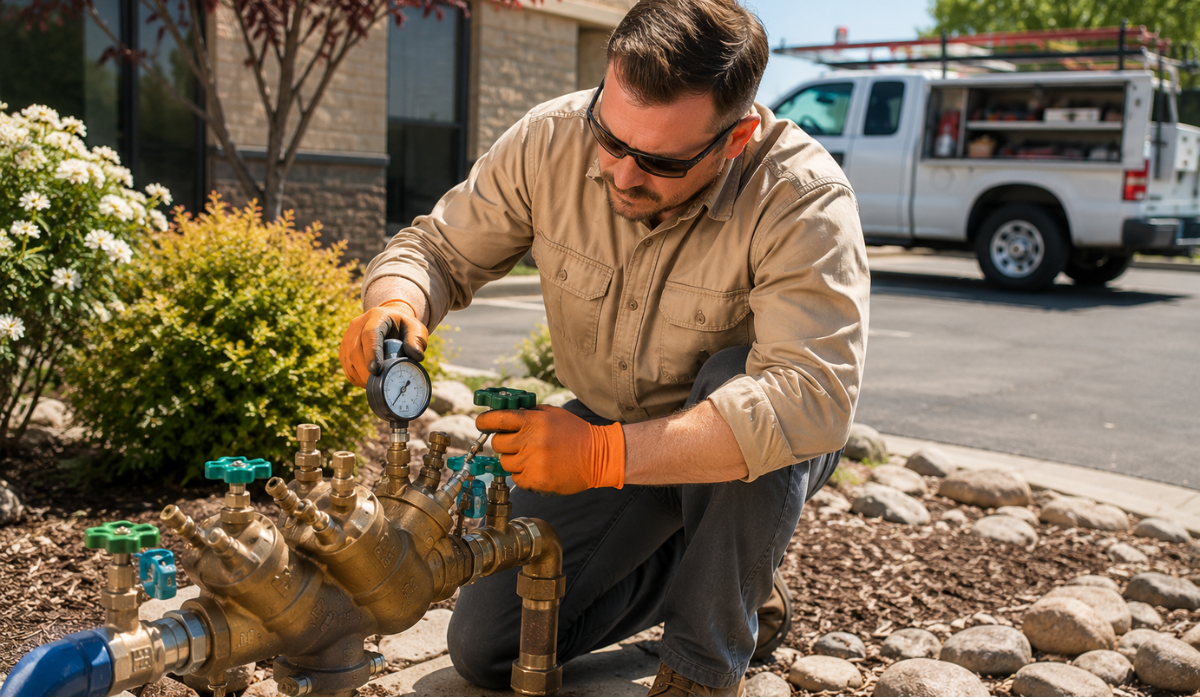

Protecting a property’s drinking water supply is one of the most important, and most overlooked, aspects of plumbing safety. Backflow testing exists to make sure the devices designed to protect that water supply are actually working the way they’re supposed to. At Backflow King, we’ve spent more than 15 years helping homeowners, businesses, and industrial facilities across Twin Falls, Idaho stay safe and compliant through professional, certified backflow testing.
In this guide, we’ll explain what backflow testing involves, why it’s legally required in most cases, and what property owners should know before scheduling their next test.
What Is Backflow Testing?
Backflow testing is the process of inspecting and verifying that a backflow prevention assembly is functioning correctly. A backflow preventer is a mechanical device installed on a water line to stop contaminated water from flowing backward into the clean, public water supply. This can happen due to sudden pressure changes, such as a water main break or heavy demand elsewhere in the system, which can pull water backward through pipes that aren’t properly protected.
Without a functioning backflow preventer, contaminants from irrigation systems, fire sprinkler systems, industrial equipment, or even simple garden hoses could potentially flow back into the drinking water supply. Backflow testing confirms that the preventer’s internal check valves and relief mechanisms are sealing properly and responding correctly under pressure, giving both property owners and local water authorities confidence that the system is doing its job.
At Backflow King, our certified technicians perform this testing using calibrated equipment and follow procedures that meet state and local requirements, ensuring accurate, defensible results every time.
Why Backflow Testing Is Required
Most municipalities, including those across the Twin Falls area, require annual backflow testing for any property with a backflow prevention assembly installed. This typically includes commercial buildings, industrial facilities, properties with irrigation systems, fire sprinkler systems, and certain types of residential connections.
There are several reasons this testing is mandatory rather than optional. Cross-connection control protects the broader public water system from contamination that could affect an entire neighborhood or city block, not just a single property. Regulatory compliance keeps a property in good standing with local water authorities, since failing to submit annual test results can result in fines or, in some cases, water service being shut off entirely. Insurance and liability protection often depends on documented, up-to-date backflow testing records, particularly for commercial and industrial properties. And simple equipment reliability matters too, since backflow preventers, like any mechanical device, can wear out, develop leaks, or fail internally over time without any visible external warning signs.
Because the consequences of a failed backflow preventer can affect an entire water system, not just one property, local water districts take this requirement seriously, and property owners are expected to keep their testing current.
What Happens During a Backflow Testing Appointment
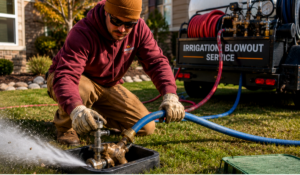
A typical backflow testing appointment is quick, straightforward, and minimally disruptive. Backflow King’s technicians begin by locating and inspecting the backflow prevention assembly, checking for visible damage, corrosion, or leaks before testing begins. From there, specialized gauges are connected to the device to measure how the internal check valves and relief valve respond under controlled pressure conditions, confirming that each component is sealing and releasing exactly as it should.
If the assembly passes, our technician provides documentation confirming the test results, which is often submitted directly to the local water authority on the property owner’s behalf. If the assembly fails, we explain exactly what component is causing the issue and provide a clear repair estimate, since in many cases a failed test simply means a worn seal or valve needs replacing rather than the entire unit needing to be replaced.
Most residential and small commercial backflow testing appointments take well under an hour, while larger industrial systems with multiple assemblies may take longer depending on the complexity of the property.
Finding Backflow Testing Near Me
When searching for backflow testing near me, it’s worth choosing a provider who is not only certified but also familiar with the specific requirements enforced by your local water district. Testing requirements, reporting deadlines, and even acceptable assembly types can vary from one municipality to another, so local experience matters.
Backflow King has tested backflow assemblies across Twin Falls for years, which means we already understand the documentation local water authorities expect, the common assembly types found throughout the region, and how to schedule testing efficiently around a property’s operating hours. Choosing a local, established provider instead of an unfamiliar national service often means faster scheduling, more accurate paperwork, and a technician who genuinely understands the area’s water system.
ABackflow Preventer Testing for Different Property Types
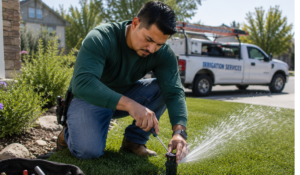
Backflow preventer testing requirements can look different depending on the type of property and how its water system is set up. Residential properties often need testing when an irrigation system, pool, or certain plumbing fixtures are connected to a backflow assembly. Commercial properties typically require testing for irrigation systems, fire sprinkler connections, boiler systems, and any equipment that could introduce contaminants into the water line. Industrial facilities frequently have multiple backflow assemblies protecting different processes, each of which may need to be tested and documented separately depending on local code.
Backflow King’s technicians are equipped to handle all of these scenarios, from a single residential irrigation backflow device to a full commercial property with several interconnected assemblies requiring individual test reports.
The Importance of an Annual Backflow Test
An annual backflow test isn’t just a bureaucratic requirement, it’s a genuine safety check that protects both the individual property and the broader community water supply. Skipping or delaying annual testing increases the risk that a failing assembly goes unnoticed until a real contamination event occurs, at which point the consequences can be far more serious and far more expensive to resolve than a routine test would have been.
Staying current on annual testing also helps avoid last-minute scrambling when a water district sends a compliance notice or deadline reminder. Backflow King can help property owners set up reminders or recurring service schedules so annual testing never falls through the cracks.
Backflow Certification Test: What It Confirms
A backflow certification test is the formal documentation process that confirms a backflow prevention assembly meets required safety standards. This certification is typically what gets submitted to the local water authority as proof of compliance, and it usually needs to be renewed every year through a new test.
Certification testing must be performed by a technician holding the appropriate state or local certification, using calibrated testing equipment that meets industry standards. Backflow King’s technicians maintain the certifications required to perform this testing throughout the Twin Falls area, and we handle the paperwork and submission process so property owners don’t have to navigate it alone.
Our Backflow Testing Services at Backflow King
At Backflow King, our backflow testing services are designed to serve residential, commercial, and industrial properties throughout Twin Falls and the surrounding region. Our work includes annual backflow preventer testing and certification, repair and replacement of failed backflow assemblies, testing coordination and paperwork submission with local water authorities, and installation of new backflow prevention devices when needed. Every test is performed using calibrated equipment and documented thoroughly, giving property owners confidence and peace of mind.
Why Choose Backflow King for Backflow Testing in Twin Falls
Backflow King has built its reputation across Twin Falls, Idaho on dependable, accurate service, and backflow testing is where that reputation began. Our team brings more than 15 years of specialized experience in backflow prevention, plumbing, and piping systems, along with the certifications required to perform legally compliant testing throughout the region. We offer fast, convenient scheduling, honest repair recommendations when an assembly fails, and thorough documentation that takes the hassle out of staying compliant. As the name suggests, backflow testing isn’t just one of our services, it’s our specialty.
FAQ
Most properties with a backflow prevention assembly are required to have it tested annually, though specific requirements can vary depending on the local water authority.
If an assembly fails, the specific faulty component is identified and a repair estimate is provided, and in most cases a retest is required once the repair is completed to confirm compliance.
Backflow King typically handles submission of test results and certification paperwork directly to the local water authority on the property owner’s behalf, simplifying the compliance process.
Contact Backflow King today at (208) 490-2423 or request a free estimate to schedule expert backflow testing in Twin Falls, Idaho.