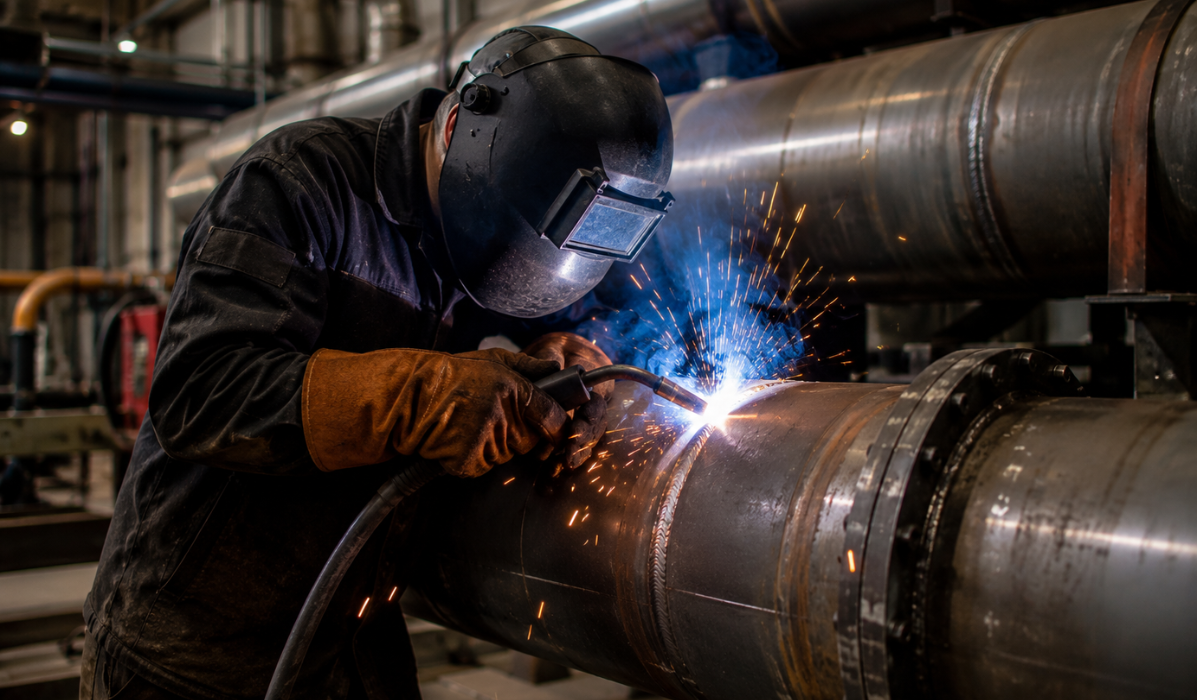

When it comes to keeping industrial, commercial, and residential water and piping systems running safely and efficiently, few trades matter as much as welding and piping. From new installations to emergency repairs, the strength and durability of a piping system depends entirely on the quality of the welds holding it together. At Backflow King, we’ve spent more than 15 years serving Twin Falls, Idaho and the surrounding areas with expert welding and piping solutions built to meet code, withstand pressure, and last for years.
In this guide, we’ll walk you through what welding and piping services actually involve, why professional piping welding matters so much for safety and compliance, and how to choose the right team for your next project.
What Are Welding & Piping Services?
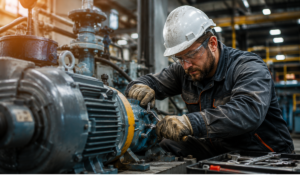
Welding and piping services cover the design, fabrication, installation, and repair of pipe systems used to transport water, gas, steam, chemicals, and other materials. This work isn’t just about connecting two pieces of metal — it’s about creating joints strong enough to handle constant pressure, temperature changes, and years of wear without failing.
A skilled welder working in piping applications must understand pipe schedules, material types such as carbon steel, stainless steel, and copper, joint configurations, and the specific welding process best suited to each job. Whether it’s a small residential repair or a large-scale industrial installation, the goal is always the same: a leak-free, code-compliant system that performs reliably for the long haul.
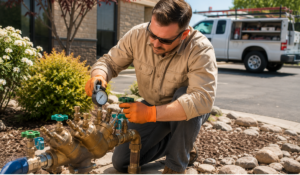
At Backflow King, our welding and piping work supports everything from fire protection systems and backflow assemblies to full industrial maintenance projects, making us a one-stop resource for property owners across Twin Falls.
Why Professional Piping Welding Matters
Cutting corners on piping welding can lead to costly and dangerous consequences, including leaks, pressure failures, contamination, or complete system breakdowns. That’s why professional piping welding isn’t just a preference; it’s a necessity for any commercial or industrial property.
Proper piping welding accomplishes several things at once. It ensures structural integrity, since correctly executed welds can withstand the internal pressure and external stress a pipe system experiences daily. It prevents leaks, because a poorly executed weld is one of the most common causes of pipe failure and water loss. It supports code compliance, as local and state regulations require piping systems to meet specific welding and material standards, especially for fire protection and backflow prevention systems. And over time, it delivers real cost savings, since a properly welded system requires far less maintenance and far fewer emergency repairs across its lifespan.
This is why hiring a certified, experienced team for your piping welding needs pays off many times over compared to attempting a DIY fix or hiring an unqualified contractor.
Understanding Piping Welding Position
One term that comes up often in the industry is piping welding position, and for good reason — the position in which a weld is performed has a major impact on its strength and quality. Pipe welders are typically trained and certified across several standard positions. The 1G position, rotated and horizontal, has the pipe rotated during welding, making it one of the easier positions to master. The 2G position, vertical and fixed, keeps the pipe stationary in a vertical orientation while the welder moves around it horizontally. The 5G position, horizontal and fixed, holds the pipe in place horizontally and requires the welder to work in multiple orientations around a single joint. The 6G position, fixed at a 45-degree angle, is considered one of the most challenging positions and is often used as the benchmark test for certifying pipe welders.
Each piping welding position demands different techniques, body positioning, and control over the weld puddle. At Backflow King, our welding team is experienced across all standard positions, allowing us to take on projects of any complexity, from straightforward horizontal runs to demanding fixed-position industrial installations.
Process Piping Welding: Safety and Compliance First
Process piping welding refers specifically to the piping systems used to carry process materials, such as chemicals, gases, steam, or other substances, through industrial and commercial facilities. Because these systems often handle hazardous or high-pressure materials, the standards for process piping welding are especially strict.
Process piping welding requires careful selection of base metals and filler materials compatible with the substances being transported, along with precise heat control to avoid warping, cracking, or weakening the pipe. It also calls for thorough inspection and, in many cases, non-destructive testing to verify weld integrity, all while maintaining full compliance with codes such as ASME B31.3, which governs process piping in industrial settings.
Backflow King’s team approaches every process piping welding project with this same level of care, ensuring that facilities across Twin Falls remain safe, compliant, and operational without unplanned downtime.
Choosing a Trusted Team Instead of Searching for “Industrial Piping and Welding LLC”
If you’ve been searching online for an industrial piping and welding LLC near you, you already know how important it is to find a team with real industrial experience, not just a general contractor who occasionally handles pipe work. Industrial piping projects demand welders who understand pressure ratings, material specifications, and the compliance requirements unique to commercial and industrial properties.
Rather than gambling on an unfamiliar company, Twin Falls property owners trust Backflow King because we combine welding and piping expertise with our broader background in backflow prevention, plumbing, fire protection, and industrial maintenance. That means we understand how your piping system connects to the rest of your property’s infrastructure, not just the weld itself.
Our Welding & Piping Services
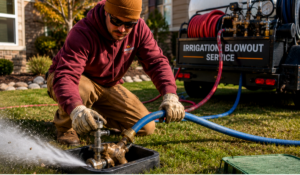
At Backflow King, our welding and piping services are designed to serve residential, commercial, and industrial clients throughout Twin Falls and the surrounding region. Our work includes new pipe installation for commercial and industrial systems, pipe repair and replacement for damaged, corroded, or leaking sections, and fire protection piping installation and repair. We also handle process piping welding for industrial facilities, structural and support piping for equipment and machinery, and emergency welding repairs available around the clock.
Every project is completed with code-compliant materials and techniques, backed by our team’s 15+ years of hands-on experience.
Signs You Need Welding & Piping Repair
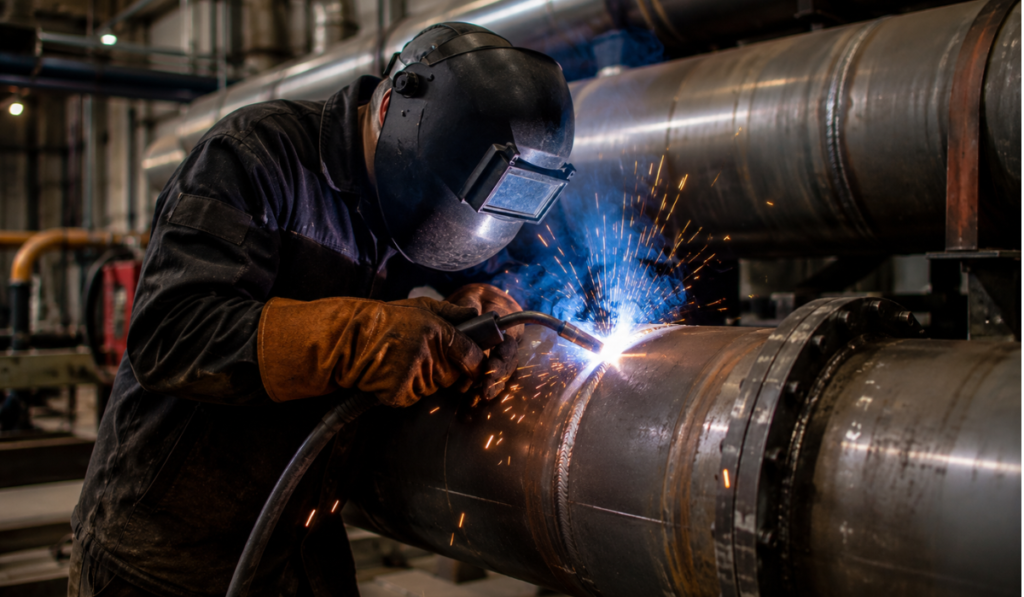
It’s not always obvious when a piping system needs attention until a small issue becomes a major, and expensive, problem. Property owners should watch for visible corrosion, rust, or discoloration around joints, along with water stains, moisture, or pooling near pipe connections. Unusual noises such as banging or hissing from pipes, a noticeable drop in water pressure, and visible cracks or gaps at welded joints are all warning signs worth paying attention to as well.
If you notice any of these signs on your property, it’s best to schedule an inspection before the issue escalates into a costly emergency repair or system failure.
Why Choose Backflow King for Welding & Piping in Twin Falls
Backflow King has built a reputation across Twin Falls, Idaho for dependable, high-quality service, and our welding and piping work is no exception. We bring more than 15 years of industry experience across residential, commercial, and industrial properties, backed by a skilled, knowledgeable team trained in multiple welding positions and processes. Our 24/7 availability means emergency piping repairs are never far away, and our full-service capability, including backflow testing, plumbing, sprinkler systems, and industrial maintenance, means we can support your entire property, not just one system. All of this is built on a strong local reputation grounded in honesty, quality workmanship, and customer satisfaction.
Whether you need a single repair or a complete industrial piping installation, our team has the experience to get the job done right the first time.
Frequently Asked Questions
What materials can be used for piping welding? Common materials include carbon steel, stainless steel, and copper, chosen based on the system’s pressure, temperature, and the substances being transported.
How long does a typical piping welding project take? Timelines vary depending on the scope of the project, ranging from a few hours for a single repair to several days for larger industrial installations.
Do you offer emergency welding and piping repairs? Yes. Backflow King provides 24/7 service for urgent piping issues throughout Twin Falls and the surrounding area.
Do you work on both residential and industrial piping systems? Yes. Our team handles projects of every size, from small residential pipe repairs to large-scale industrial and commercial installations, adjusting our approach and equipment to match the scope of each job.
Is welded piping better than other joining methods? For most commercial and industrial applications, welded joints offer greater strength, better pressure resistance, and a lower long-term failure rate compared to threaded or compression fittings, which is why welding remains the preferred method for critical piping systems.
Get Started with Backflow King Today
Whether you’re dealing with a damaged pipe joint, planning a new industrial installation, or simply want a trusted team on call for future needs, Backflow King is ready to help. Our experienced welders bring the skill, certifications, and attention to detail your piping system deserves.
Contact Backflow King today at (208) 490-2423 or request a free estimate to get expert welding and piping services in Twin Falls, Idaho.